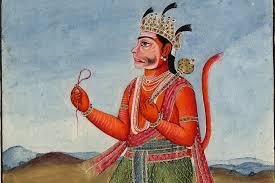
Summary
Biography
Vali, also known as Bali, is one of the most formidable and tragic figures in the Hindu epic Ramayana. Renowned for his extraordinary strength, valor, and martial skill, Vali was the Vanara king of Kishkindha and the elder brother of Sugriva. His life story is marked by heroism, misunderstanding, pride, and eventual realization of dharma. Though often viewed as a controversial character, Vali’s narrative highlights the complexity of righteousness and the consequences of unchecked power.
Birth and Divine Lineage
Vali was born to Indra, the King of the Devas, making him a semi-divine being endowed with immense physical and spiritual power. As Indra’s son, Vali inherited qualities of leadership, courage, and dominance. His divine origin set him apart among the Vanaras, and from a young age, he displayed extraordinary feats of strength and bravery.
Vali’s younger brother, Sugriva, was born to Surya, the Sun God. Despite having different divine fathers, the brothers shared a strong bond in their early years and ruled Kishkindha together in mutual trust and harmony.
Extraordinary Strength and Boon
Vali’s most defining attribute was his unparalleled strength. He possessed a unique boon that allowed him to absorb half the strength of his opponent during combat, making him nearly invincible. This power rendered even mighty warriors and demons helpless before him.
Vali’s strength was not merely physical; he was also a skilled warrior, tactician, and leader, feared and respected across realms. Many demons avoided confrontation with him, and his fame spread far beyond Kishkindha.
Reign as King of Kishkindha
As king, Vali ruled Kishkindha with authority and confidence. He was a protector of his people and maintained dominance over neighboring territories. However, his rule was also characterized by pride and impulsiveness, which gradually overshadowed his virtues.
Sugriva served as his trusted deputy, and together they maintained peace and order. At this stage, Vali was a capable ruler, admired for his bravery and leadership.
The Conflict with Mayavi
The turning point in Vali’s life occurred during his battle with the demon Mayavi, who challenged him to combat. The fight led both into a cave, and the entrance was sealed by Sugriva after blood flowed out, leading him to believe Vali was dead.
Sugriva’s intention was to protect the kingdom, but when Vali emerged alive after killing Mayavi, he misinterpreted Sugriva’s action as betrayal.
Misunderstanding and Fall into Adharma
Blinded by rage and suspicion, Vali attacked Sugriva, drove him out of Kishkindha, and seized Ruma, Sugriva’s wife. This act marked Vali’s deviation from dharma, as taking a brother’s wife was considered a grave sin.
Vali’s inability to listen, investigate, or forgive transformed him from a righteous king into a tyrant driven by ego and insecurity.
Fearlessness and Challenge to the Gods
Vali’s pride grew to such an extent that he challenged even celestial beings. His dominance disrupted cosmic balance, as his strength made him virtually unstoppable.
Despite his valor, this unchecked power became his downfall, demonstrating the Ramayana’s recurring theme that strength without righteousness leads to destruction.
Encounter with Lord Rama
Vali’s fate was sealed when Lord Rama allied with Sugriva. Rama promised to restore Sugriva’s kingdom by defeating Vali.
During the duel between Vali and Sugriva, Rama shot Vali from behind with an arrow. This act has been debated for centuries, raising ethical questions.
Rama justified his action by explaining that Vali, as a king, had violated dharma by taking his brother’s wife and ruling unjustly. As a Kshatriya prince, Rama had the duty to punish wrongdoing.
Realization and Redemption
In his final moments, Vali realized his mistakes. He acknowledged Rama’s divine authority and recognized his own errors in judgment.
Vali forgave Sugriva, entrusted the future of Kishkindha to him, and asked him to care for his son Angada. This moment of humility transformed Vali’s end into a spiritual redemption rather than mere defeat.
Death and Afterlife
Vali’s death was tragic yet meaningful. His realization restored balance and reinforced the moral framework of the Ramayana.
Through his acceptance of dharma at the end, Vali attained peace, proving that even the mightiest can find redemption through self-awareness and humility.
Symbolism and Philosophical Meaning
Vali represents:
- Immense power without restraint
- The dangers of pride and ego
- The importance of justice in leadership
- Redemption through realization
His character illustrates that even heroic strength must submit to moral law.
Cultural Legacy
Vali remains a deeply discussed figure in Indian philosophy, literature, and theology. He is neither purely villain nor hero, but a tragic king whose flaws led to his fall.
Temples, performances, and Ramayana retellings portray him as a warning against arrogance and as an example of redemption.
Conclusion
Vali’s life is a powerful lesson in the responsible use of power. His rise and fall emphasize that dharma is superior to strength, and leadership without moral discipline leads to ruin. His tragic end and final realization secure his place as one of the most complex and thought-provoking characters in the Ramayana.