Summary
Biography
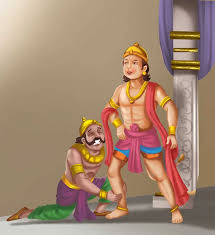
Angada is a significant yet often understated character in the Hindu epic Ramayana. He is remembered as the son of Vali, the mighty Vanara king of Kishkindha, and as a noble prince who stood firmly on the side of Lord Rama during the great battle against Ravana. Angada’s life represents youth tempered with wisdom, courage balanced by diplomacy, and loyalty grounded in dharma rather than personal grievance.
Birth and Lineage
Angada was born to Vali (Bali) and Tara, the intelligent and virtuous queen of Kishkindha. As the son of Indra’s lineage through Vali, Angada inherited divine strength, valor, and leadership qualities. From childhood, he was trained in warfare, governance, and the ethical duties of a ruler.
His mother Tara played a crucial role in shaping Angada’s character. Known for her wisdom and foresight, Tara instilled in him the values of restraint, clarity of thought, and respect for dharma.
Childhood and Early Promise
Angada grew up in the royal court of Kishkindha, witnessing both the glory and eventual downfall of his father. He was known among the Vanaras for his discipline, intelligence, and sense of justice. Unlike many young princes driven by ambition, Angada displayed maturity beyond his years.
He was deeply attached to his father, Vali, and admired his strength, though he later came to understand the flaws that led to Vali’s tragic end.
The Fall of Vali and Angada’s Crisis
The death of Vali at the hands of Lord Rama was a turning point in Angada’s life. After Vali was mortally wounded, he acknowledged his mistakes and entrusted Angada’s future to Sugriva, urging him to rule justly and care for his son.
For Angada, this was a moment of emotional turmoil. He lost his father, his birthright, and the security of kingship. However, instead of seeking revenge or rebellion, Angada chose the path of restraint and righteousness.
Relationship with Sugriva
Though Sugriva became king of Kishkindha, Angada never challenged his authority. Sugriva, honoring Vali’s last wishes, treated Angada with respect and affection.
Angada’s acceptance of Sugriva’s rule demonstrated his moral strength. Despite being the rightful heir, he prioritized stability and unity over personal ambition.
Alliance with Lord Rama
Angada recognized the divine nature and moral authority of Lord Rama. Instead of viewing Rama as his father’s slayer, he saw him as an instrument of dharma.
This acceptance elevated Angada’s character, showing his ability to rise above personal loss in favor of a higher moral purpose.
Role in the Search for Sita
Angada was appointed as a key leader in the southern search party tasked with finding Goddess Sita. His presence brought discipline and resolve to the mission.
When the Vanaras reached the seashore and faced despair over crossing the ocean to Lanka, Angada encouraged unity and perseverance. His leadership during this critical moment helped prevent fragmentation of the group.
Diplomatic Mission to Ravana
One of Angada’s most iconic contributions was his role as messenger to Ravana. Before the war, Angada entered Ravana’s court with confidence and dignity, delivering Rama’s final warning.
When challenged, Angada demonstrated his immense strength by planting his foot firmly into the ground and daring Ravana’s warriors to move it. This act symbolized the invincibility of dharma and Rama’s cause.
Ravana’s failure to move Angada’s foot humiliated his court and foreshadowed Lanka’s downfall.
Role in the War of Lanka
Angada fought bravely in the war against Ravana, displaying both martial skill and strategic awareness. He led troops, confronted powerful rakshasas, and inspired confidence among the Vanara army.
Despite his youth, Angada proved himself equal to seasoned warriors, embodying the legacy of his father while transcending his flaws.
Character and Symbolism
Angada represents:
- Moral maturity in youth
- Loyalty to dharma over revenge
- Courage with humility
- Responsible leadership
He bridges the legacy of Vali and the righteous rule of Sugriva.
Relationship with Hanuman
Angada shared a deep bond with Hanuman, whom he respected as a mentor and elder. Hanuman’s devotion to Rama influenced Angada’s own spiritual outlook.
Together, they exemplified disciplined service and unwavering faith.
Legacy and Cultural Significance
Angada is revered as an ideal prince who sacrificed personal ambition for the greater good. His conduct serves as a lesson for future leaders on humility, diplomacy, and ethical courage.
In Ramayana performances and literature, Angada is portrayed as a symbol of youthful strength guided by wisdom.
Conclusion
Angada’s life is a testament to the power of self-control and moral clarity. Despite facing loss, injustice, and temptation, he chose dharma, loyalty, and service. His role in Rama’s mission secured his place as one of the noblest Vanara heroes in the Ramayana.