Summary
Biography
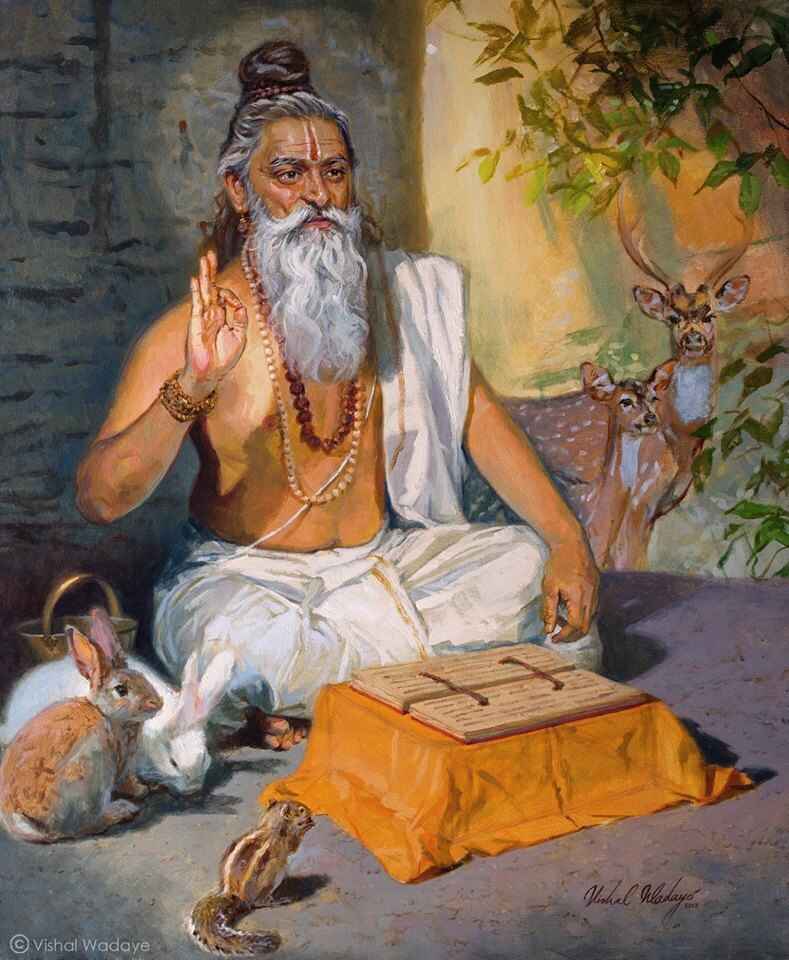
Sage Vashishta is one of the most esteemed figures in Hinduism and is known for his profound contributions to Vedic knowledge, philosophy, and spirituality. A prominent member of the Saptarishi (Seven Great Sages), Vashishta occupies a central role in many ancient texts, including the Vedas, Ramayana, and Mahabharata. His wisdom, deep meditation practices, and teachings on dharma (righteous living) make him one of the most revered sages in Hindu tradition.
Early Life and Lineage:
Vashishta is traditionally believed to be born from the mind of Brahma, the Creator God. He is one of the Manasaputras (mind-born sons) of Brahma, who, like his brothers (Atri, Bhrigu, Kashyapa, and others), was born with an immense understanding of the universe. His birth was not only the result of divine will but also symbolized the transfer of cosmic wisdom to humanity. Vashishta was thus born with the capacity to understand and transmit the profound spiritual truths of the Vedas and other sacred texts.
In the Vedas, Vashishta is regarded as one of the principal rishis who helped organize and systematize the knowledge contained within these sacred scriptures. He is the author of several hymns in the Rigveda and is credited with establishing many of the foundational principles of Vedic rituals.
Role in the Vedas and Spiritual Teachings:
Vashishta’s teachings are a central part of Vedic philosophy. He is considered a repository of wisdom, knowledge, and truth, and his work helped shape the understanding of the divine, the soul, and the material world. His most famous text is the Vashishta Samhita, a collection of teachings and hymns that lay out the principles of dharma, ethics, and spiritual growth. His hymns emphasize devotion to the divine, meditation, and a disciplined life in accordance with the laws of the universe.
Vashishta is also credited with authoring several important texts, including the Vashishta Yoga, which focuses on the practice of meditation and the realization of the self through spiritual discipline. Through these texts, he outlined a path for humans to transcend the limitations of the material world and attain spiritual enlightenment.
Vashishta and Lord Rama:
One of the most important aspects of Vashishta’s life is his relationship with Lord Rama, the seventh avatar of Lord Vishnu and the protagonist of the Ramayana. Vashishta was the spiritual guru of Rama, and he played a pivotal role in shaping the character and principles of the prince of Ayodhya.
Vashishta’s teachings to Rama were profound and comprehensive, and they included guidance on personal dharma, the importance of righteousness (satya), the need for self-control, and the duty of a king to uphold justice. Vashishta imparted the virtues of compassion, courage, and devotion to Lord Rama, all of which played a significant role in shaping Rama's journey as an ideal king and warrior. Through Vashishta’s guidance, Rama learned the importance of adhering to divine will and the path of righteousness, even when faced with extreme challenges and hardships.
In the Ramayana, Vashishta is also shown as a father figure to Rama. He acts as a moral and spiritual compass, guiding Rama through many dilemmas. It was under Vashishta’s tutelage that Rama acquired the wisdom to lead the people of Ayodhya with justice and compassion, making him the ideal king and a symbol of dharma.
Vashishta and King Dasharatha:
Vashishta’s role in the Ramayana is not limited to his relationship with Lord Rama alone. He also played an important role in the life of King Dasharatha, Rama’s father. Dasharatha, who was deeply concerned about his kingdom and the welfare of his sons, sought Vashishta’s counsel on several occasions. Vashishta’s wisdom guided Dasharatha through various dilemmas, including the decision to crown Rama as the successor to the throne. In times of crisis, Vashishta was a trusted advisor to Dasharatha, helping him navigate through complex moral and spiritual challenges.
Meditation and Spiritual Wisdom:
As a sage who lived a life of discipline and devotion, Vashishta was also a master of meditation and spiritual practice. He taught his disciples the importance of quietening the mind, controlling the senses, and focusing on the divine. He believed that meditation was the path to liberation (moksha), as it allowed the seeker to experience the true nature of the self and the universe.
In one of the famous stories from the Ramayana, when Sage Vashishta’s hermitage was attacked by King Vishwamitra, he used the power of his meditation to protect his ashram and the sacred rituals he was performing. This incident highlights Vashishta’s ability to remain calm and focused under pressure and to use his spiritual knowledge for the greater good.
Vashishta’s Connection with Lord Vishnu:
Vashishta was also a close associate of Lord Vishnu, the preserver of the universe. It is believed that Vashishta had a direct connection to the divine, which is why his teachings were so profound and revered. He is often depicted in Vedic texts as someone who understood the intricate balance between creation, preservation, and destruction.
In the Mahabharata and other texts, Vashishta is described as a symbol of divine wisdom and guidance. His connection with Lord Vishnu, through his teachings and interactions, also reinforces the belief that the path to spiritual enlightenment is one of deep devotion, discipline, and self-control.
Legacy and Influence:
Sage Vashishta's contributions to Vedic philosophy, spirituality, and meditation have left a lasting legacy on Hindu thought. As one of the Saptarishi, he is considered a beacon of wisdom, guiding humanity toward righteousness, devotion, and inner peace.
The influence of Vashishta is not confined to ancient times. His teachings continue to be revered and followed by millions, and his wisdom is studied by scholars, yogis, and spiritual seekers. His emphasis on the practice of meditation, self-discipline, and devotion to the divine remains a central tenet in Hinduism today.
Conclusion:
Sage Vashishta remains one of the most revered figures in Hindu spirituality. His role as the spiritual guide of Lord Rama, his contributions to Vedic wisdom, and his teachings on meditation, dharma, and the divine order have earned him a timeless place in the hearts and minds of devotees. Through his life and teachings, Vashishta continues to inspire spiritual seekers and scholars alike, representing the ideals of self-realization, righteousness, and divine wisdom.
