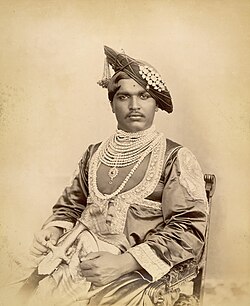
Shahu Maharaj
Warriors & Kings | 18 May 1682 - 15 December 1749
"Chhatrapati Shahu Maharaj was one of the most influential rulers of the Maratha Empire and the grandson of Chhatrapati Shivaji Maharaj. His reign marked the consolidation and expansion of Maratha power across India. Through administrative reforms, capable leadership, and the appointment of skilled Peshwas, Shahu Maharaj transformed the Maratha state into a dominant political force."
Born
18 May 1682Birthplace
Raigad Fort, Maharashtra, IndiaDied
15 December 1749Place of Death
Satara, Maharashtra, IndiaNationality
Indian (Maratha)Gender
MaleChhatrapati Shahu Maharaj Biography
Chhatrapati Shahu Maharaj, also known as Shahu I, was one of the most important rulers of the Maratha Empire. As the grandson of Chhatrapati Shivaji Maharaj, he inherited a legacy of courage, leadership, and dedication to Swarajya. His reign helped transform the Maratha state into a powerful empire that exercised influence over much of the Indian subcontinent.
Early Life
Shahu Maharaj was born on 18 May 1682 at Raigad Fort. He was the son of Chhatrapati Sambhaji Maharaj and Maharani Yesubai.
During the Mughal-Maratha conflict, Shahu was captured by the forces of Emperor Aurangzeb in 1689 following the execution of his father. He spent many years in Mughal captivity, where he received education and gained valuable political experience.
Release from Captivity
After the death of Aurangzeb in 1707, the Mughal Empire faced internal political struggles. During this period, Shahu Maharaj was released by the Mughals.
His release was expected to create divisions among the Marathas, but Shahu successfully established himself as a legitimate successor to the Maratha throne.
Struggle for Succession
Upon returning to Maharashtra, Shahu faced opposition from Maharani Tarabai, who was governing on behalf of her son.
The dispute led to a civil conflict within the Maratha state. In the Battle of Khed in 1707, Shahu emerged victorious and secured recognition as the rightful Chhatrapati of the Maratha Empire.
Coronation and Rule
After consolidating his authority, Shahu Maharaj established his capital at Satara. His reign focused on strengthening administration, maintaining political stability, and expanding Maratha influence across India.
He was known for his diplomatic abilities, patience, and commitment to good governance.
Appointment of Balaji Vishwanath
One of Shahu Maharaj's most important decisions was the appointment of Balaji Vishwanath as Peshwa.
Balaji Vishwanath helped restore unity within the Maratha state and negotiated important agreements that enhanced Maratha power. This decision laid the foundation for the rise of the Peshwa administration.
Rise of the Peshwas
Under Shahu Maharaj's leadership, capable Peshwas played a significant role in managing state affairs and military campaigns.
Notable Peshwas included:
- Balaji Vishwanath
- Baji Rao I
- Balaji Baji Rao (Nana Saheb)
Their leadership helped extend Maratha influence into northern, central, and western India.
Expansion of the Maratha Empire
During Shahu's reign, the Maratha Empire expanded considerably. Maratha forces established influence across large parts of the Indian subcontinent.
Key achievements included:
- Expansion into Malwa and Gujarat.
- Increased influence in the Deccan.
- Recognition of Maratha rights to collect Chauth and Sardeshmukhi.
- Growth of Maratha military and administrative power.
These developments transformed the Marathas into one of the strongest political powers in India.
Administrative Reforms
Shahu Maharaj paid close attention to governance and administration. He encouraged efficient revenue collection, promoted agricultural development, and strengthened public institutions.
His administration worked to ensure stability and prosperity within the empire.
Religious Tolerance and Welfare
Shahu Maharaj was known for his generosity and religious tolerance. He treated people of different backgrounds with respect and supported various religious and social institutions.
His commitment to fairness and welfare earned him the loyalty of many subjects.
Leadership Qualities
Shahu Maharaj was admired for:
- Political wisdom.
- Diplomatic skill.
- Commitment to justice.
- Administrative efficiency.
- Support for capable leaders.
- Dedication to Maratha unity.
Death
Shahu Maharaj passed away on 15 December 1749 in Satara. His death marked the end of an important chapter in Maratha history.
By the time of his death, the Maratha Empire had grown into one of the most influential powers in India.
Legacy
Chhatrapati Shahu Maharaj is remembered as the ruler who consolidated and strengthened the Maratha Empire after years of conflict. His support for talented administrators and military leaders enabled the empire to achieve unprecedented growth.
His reign created the foundation for the Marathas to become a dominant force in eighteenth-century India.
Historical Significance
Historians regard Shahu Maharaj as one of the architects of Maratha expansion. His ability to unite the Maratha leadership and delegate authority effectively contributed significantly to the empire's success.
His rule demonstrated the importance of diplomacy, administrative skill, and visionary leadership.
Honours and Recognition
- Grandson of Chhatrapati Shivaji Maharaj.
- Son of Chhatrapati Sambhaji Maharaj.
- Chhatrapati of the Maratha Empire from 1708 to 1749.
- Instrumental in the rise of the Peshwa administration.
- Remembered as one of the most successful Maratha rulers.
Conclusion
Chhatrapati Shahu Maharaj played a crucial role in rebuilding and expanding the Maratha Empire during a transformative period in Indian history. Through wise leadership, administrative reforms, and support for capable statesmen, he ensured the growth and stability of the Maratha state. His legacy remains a shining example of effective governance, unity, and nation-building.
Comments & Tribute (0)