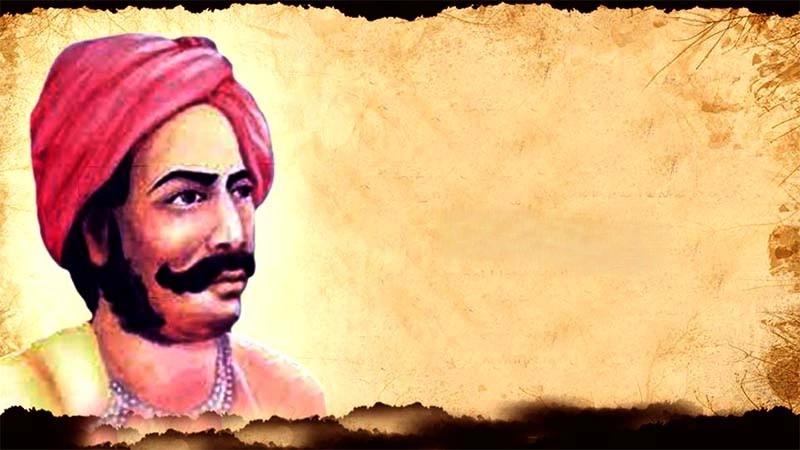
Personal Information
- Date of Birth: 23 Jan 1809
- Place of Birth: Khinda Village, Sambalpur District, Odisha, India
- Date of Death: 28 Feb 1884
- Place of Death: Asirgarh Fort Prison, Khandwa District, Madhya Pradesh, India
- Nationality: Indian
- Occupation: Freedom Fighter, Revolutionary Leader, Guerrilla Warrior, Prince of Sambalpur
Summary
Biography
Veer Surendra Sai was born on 23 January 1809 in Khinda village, about 40 kilometers from Sambalpur in present-day Odisha. He belonged to the Chauhan dynasty, the royal family of Sambalpur. His father was Dharam Singh, and he was a direct descendant of King Madhukar Sai, making him a legitimate claimant to the throne of Sambalpur.
From childhood, Surendra Sai displayed remarkable bravery, leadership, and physical strength. He was trained in horse riding, swordsmanship, archery, and traditional warfare. He also developed close ties with the tribal communities of western Odisha, including the Gonds, Binjhals, and other forest-dwelling groups. These relationships later became the foundation of his resistance movement.
Political Background
During the early nineteenth century, the British East India Company was expanding its control across India. Sambalpur came under British influence after the decline of the Maratha Empire.
In 1827, the ruler of Sambalpur, Maharaja Sai, died without a male heir. According to local custom, Surendra Sai had a legitimate claim to the throne. However, the British ignored his claim and installed Rani Mohan Kumari as ruler because they believed she would be easier to control. This decision angered many local chiefs, zamindars, and tribal leaders, who supported Surendra Sai.
The British decision marked the beginning of a long struggle that lasted for decades.
Beginning of the Revolt
At only eighteen years of age, Surendra Sai openly challenged British authority. He was joined by his brothers, uncle Balaram Singh, local zamindars, and tribal warriors.
His movement was not simply about claiming the throne. It gradually became a wider struggle against British interference, excessive taxation, and injustice toward local communities.
The British viewed him as a dangerous rebel. After several clashes, he was arrested in 1840 and imprisoned in Hazaribagh Jail in present-day Jharkhand.
Years in Prison
Surendra Sai remained imprisoned for about 17 years. Despite harsh prison conditions, he never abandoned his dream of freeing his homeland.
During this period, British policies became increasingly unpopular. Heavy taxation, interference in local administration, and disregard for traditional customs caused widespread resentment among the people.
The Revolt of 1857
In 1857, India's First War of Independence broke out.
When the rebellion reached Hazaribagh, rebel soldiers released many prisoners, including Surendra Sai. Once free, he immediately returned to Sambalpur and resumed his struggle against British rule.
Unlike many leaders whose movements ended after 1857, Surendra Sai continued fighting for several more years, making him one of the longest-resisting freedom fighters in Indian history.
Guerrilla Warfare
Understanding that his forces were much smaller than the British army, Surendra Sai adopted guerrilla warfare.
He and his followers operated from the forests and hills of western Odisha, particularly around the Debrigarh region.
His tactics included:
- Surprise attacks on British camps.
- Ambushing military convoys.
- Destroying communication routes.
- Using forests as natural protection.
- Receiving support from tribal communities.
These strategies made it extremely difficult for British forces to defeat him.
The tribal people supplied food, shelter, and intelligence. Their loyalty helped Surendra Sai continue the struggle for years despite limited resources.
Leadership Qualities
Surendra Sai possessed exceptional leadership skills.
He inspired people from different communities to unite against colonial rule.
His leadership was based on:
- Personal courage.
- Honesty.
- Respect for local traditions.
- Strategic military planning.
- Concern for ordinary people.
He treated his followers as equals and shared their hardships. This strengthened their commitment to the cause.
British Difficulties
The British launched repeated military campaigns against Surendra Sai.
Several experienced officers attempted to capture him.
However, the difficult terrain and support from local tribes frustrated British efforts.
Even after suppressing the 1857 Revolt elsewhere in India, the British continued facing resistance in Sambalpur because of Surendra Sai.
For nearly five years after 1857, his movement remained active and prevented the British from exercising complete control over western Odisha.
Surrender
By 1862, continuous warfare had exhausted the people.
The British offered assurances of peace and fair treatment if Surendra Sai surrendered.
Believing that this would spare innocent people from further suffering, he agreed to surrender.
Unfortunately, the British failed to honor their promises.
Although he had surrendered peacefully, he was again arrested and imprisoned.
Final Imprisonment
After his arrest, Surendra Sai was transferred to the remote Asirgarh Fort Prison in present-day Madhya Pradesh.
The prison was isolated and heavily guarded.
Even in prison, the British considered him a threat because they feared his influence over the people.
He spent nearly 20 more years in captivity.
Altogether, he spent approximately 37 years of his life in prison, one of the longest imprisonments endured by any Indian freedom fighter.
Death
Veer Surendra Sai died in Asirgarh Fort Prison on 28 February 1884 at the age of 75.
He never lived to see India become independent, but his sacrifices became an enduring symbol of courage and patriotism.
Contribution to India's Freedom Struggle
Surendra Sai made several lasting contributions:
- He resisted British rule for more than three decades.
- He united tribal communities with local rulers.
- He pioneered effective guerrilla warfare in eastern India.
- He defended the rights of the people of Sambalpur.
- He inspired later generations of freedom fighters.
His movement demonstrated that determined local resistance could challenge even the most powerful colonial administration.
Relationship with Tribal Communities
One of Surendra Sai's greatest strengths was his close relationship with tribal communities.
The Gonds, Binjhals, and many other tribal groups considered him their leader.
Rather than treating them merely as soldiers, he respected their customs and traditions.
This mutual trust transformed the freedom movement into a people's movement rather than only a royal succession dispute.
Personal Qualities
Veer Surendra Sai was known for:
- Extraordinary bravery.
- Patriotism.
- Selflessness.
- Strategic thinking.
- Physical endurance.
- Loyalty to his people.
- Determination.
- Compassion.
He never compromised his principles, even during decades of imprisonment.
Legacy
Today, Veer Surendra Sai is remembered as the "Lion of Sambalpur."
Numerous institutions have been named in his honor, including:
- Veer Surendra Sai Institute of Medical Sciences and Research
- Veer Surendra Sai University of Technology
His statues stand in many parts of Odisha, and his birth anniversary is observed with respect and patriotic programs.
Interesting Facts
- He was born on 23 January 1809.
- He belonged to the royal Chauhan dynasty of Sambalpur.
- He was imprisoned twice by the British.
- He spent nearly 37 years in prison.
- He led one of the longest armed resistances against British rule.
- He relied heavily on guerrilla warfare.
- Tribal communities remained loyal to him throughout the struggle.
- He died in Asirgarh Fort Prison in 1884.
- He is celebrated as one of Odisha's greatest freedom fighters.
Conclusion
Veer Surendra Sai occupies a unique place in the history of India's freedom struggle. Long before independence became a nationwide movement, he challenged British authority with unmatched courage and determination. His resistance was remarkable not only because of its duration but also because it united tribal communities, local chiefs, and ordinary people under a common cause. Despite enduring decades of imprisonment, he never abandoned his commitment to justice and freedom.
His life teaches us that true leadership is built on courage, sacrifice, integrity, and service to society. Although he did not witness India's independence, his unwavering struggle laid an important foundation for later movements against colonial rule. Today, he is rightly honored as one of the greatest sons of Odisha and one of India's most inspiring freedom fighters. His legacy continues to remind every generation that the love for one's country is measured not by words, but by courage, perseverance, and selfless sacrifice.