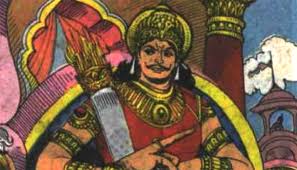
Personal Information
- Place of Birth: Approx. Late 4th Century CE, Coastal Kalinga (modern Odisha region)
- Place of Death: Approx. Early 5th Century CE, Mathara Kingdom, Kalinga
- Occupation: King of Kalinga, Founder of the Mathara Dynasty, Regional Administrator
- Era: Ancient India – 4th to 5th Century CE
Summary
Biography
Shaktivarman stands as one of the most significant early rulers of ancient coastal Kalinga and is widely recognized as the founder of the Mathara Dynasty. His reign is believed to have flourished during the late 4th to early 5th century CE, a time when the eastern regions of India were undergoing political reorganization following the decline of earlier local powers. The Mathara Dynasty played a vital role in shaping the political framework of ancient Kalinga, covering parts of present-day Odisha and Northern Andhra Pradesh, and Shaktivarman’s leadership laid the foundation for its long-term stability and influence.
Historical Background and Rise of the Mathara Dynasty
Before Shaktivarman’s rise, the region of Kalinga had witnessed the rule of various dynasties—from the Mauryas and Satavahanas to local chieftains. By the late 3rd and early 4th centuries CE, political power in Kalinga had become fragmented. The fall of the Ikshvakus and weakening of the Pallavas in nearby regions created a power vacuum. It was during this transitional era that Shaktivarman emerged as a strong regional leader, consolidating territories and giving shape to what would come to be known as the Mathara Dynasty.
His inscriptions, particularly the grant plates, indicate that Shaktivarman held the royal title of “Maharaja”, a marker of sovereignty and independent authority. These inscriptions form the primary historical sources for reconstructing his reign and the early Mathara period.
Early Life and Royal Lineage
Though concrete details about Shaktivarman's early life are limited, inscriptions suggest he belonged to a local aristocratic lineage rooted in Kalinga’s administrative and military structure. His rise to power appears to have come through a combination of inheritance, military capability, and political acumen.
He established the dynastic capital in a region under strong trade, coastal activity, and agricultural productivity. The strategic location of Kalinga, with its access to the sea and fertile river valleys, played a crucial role in his rise.
Administration and Governance
Shaktivarman’s governance style reflected a shift from tribal chieftainship to structured monarchy. His inscriptions reveal his efforts to create a stable, organized, and revenue-based administration.
Key Features of his Administration Include:
1. Land Grants and Brahmanical Support
Shaktivarman issued several land grants to Brahmins, reflecting both religious devotion and political strategy. These grants helped him secure ideological legitimacy and loyalty from influential social groups.
2. Centralized Administration
The Mathara capital functioned as the administrative heart of the kingdom. Officials, ministers, and scribes played a role in managing land records, taxation, and justice.
3. Local Governance
He allowed village assemblies and local leaders to retain autonomy in minor matters. This ensured efficient administration while reducing internal rebellion.
4. Maintenance of Order
Inscriptions describe Shaktivarman as a benevolent yet firm ruler who ensured law and order. This stability enabled expanded trade and agricultural development.
Military Strength and Territorial Control
As the early ruler of the Mathara Dynasty, Shaktivarman focused on securing his territory. Though not portrayed as an aggressive conqueror, he ensured defense against neighboring powers such as the Pallavas, Vakatakas, and residual Ikshvaku influence. His success in maintaining a secure and independent kingdom speaks to his diplomatic and military capabilities.
Territorial Influence Included:
- Coastal Andhra
- Southern Odisha
- Riverine trade routes
- Agricultural valleys of Eastern Ghats
The kingdom’s territory was neither too expansive nor too small but strategically positioned to control trade and communication between northern and southern India.
Religion and Cultural Contributions
Shaktivarman was a devout follower of Brahmanism, as indicated by the numerous land grants to Brahmins. However, his policies were not restrictive and allowed coexistence of various religious groups.
His Cultural Influence Includes:
1. Promotion of Vedic Culture
Donations to Brahmins ensured the spread of Vedic rituals and Sanskrit learning in the region.
2. Patronage to Scholars
His inscriptions reflect a high degree of literacy and administrative precision, suggesting support for scribes, scholars, and priests.
3. Role in Temple and Shrine Development
Although no surviving temples can be directly attributed to him, the growth of early medieval architecture in Kalinga can be traced to the stability he provided.
Economic Prosperity Under His Rule
Shaktivarman’s reign brought a period of economic consolidation.
1. Agriculture
The Mathara territory had fertile lands suitable for rice, pulses, coconut, and coastal crops.
2. Maritime Trade
Kalinga’s ports had long been connected to Southeast Asia, Sri Lanka, and coastal trade networks. Shaktivarman’s stable rule revived this commercial activity.
3. Craft and Industry
Metalwork, pottery, textile weaving, and maritime crafts flourished.
4. Revenue System
Taxes were imposed primarily on land, trade, and artisanal production, creating a balanced and sustainable economy.
Death and Succession
Shaktivarman passed away around the early 5th century CE, leaving behind an organized and prosperous kingdom. He was succeeded by later Mathara rulers such as Virasimhavarman and Prabhanjanavarman. These successors continued the administrative structure he established.
His death did not lead to immediate instability; instead, his dynasty enjoyed several decades of influence before being gradually overshadowed by the rise of the Eastern Gangas and other local powers.
Legacy of Shaktivarman
Shaktivarman’s legacy is significant for several reasons:
- He founded the Mathara Dynasty, giving political identity to coastal Kalinga.
- His administration laid the foundation for early medieval governance in the eastern Deccan.
- His land grant inscriptions remain vital historical sources for reconstructing ancient Kalinga’s political and cultural structure.
- He ensured economic revival, stability, and regional growth, enabling trade and agriculture to flourish.
- His reign marked the transition from ancient to early medieval state formation in eastern India.
Shaktivarman remains an important yet often overlooked figure in Indian history, especially in the context of regional kingdoms that shaped early medieval India.