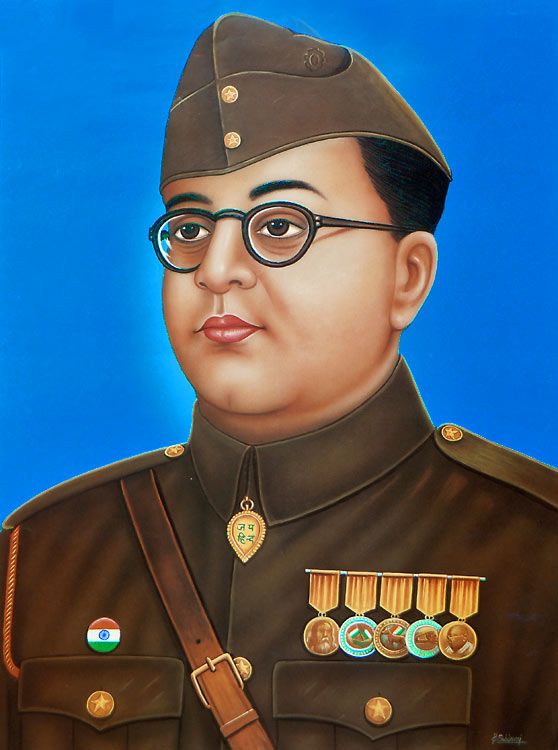
Subhas Chandra Bose
Freedom Fighters | 23 January 1897 - 18 August 1945 (Disputed)
"Subhas Chandra Bose, popularly known as Netaji, was one of India's most dynamic freedom fighters. He led the Indian National Army (INA) and organized armed resistance against British rule, inspiring millions with his patriotism, courage, and famous slogan, "Give me blood, and I shall give you freedom.""
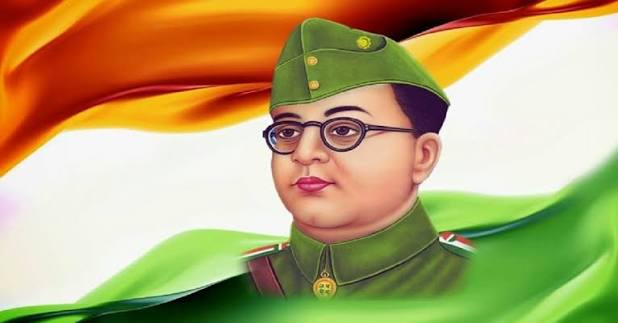
Born
23 January 1897Birthplace
Cuttack, Odisha Division, Bengal Presidency, British India (Present-day Odisha, India)Died
18 August 1945 (Disputed)Place of Death
Taihoku Airport, Japanese Taiwan (Present-day Taipei, Taiwan) - ReportedNationality
IndianGender
MaleSubhas Chandra Bose Biography
Subhas Chandra Bose, popularly known as Netaji, was one of the most influential leaders of India's freedom struggle. Renowned for his courage, patriotism, and determination, Bose believed that complete independence from British rule could be achieved only through active resistance. His leadership of the Indian National Army (INA) made him a legendary figure in Indian history.
Early Life and Family
Subhas Chandra Bose was born on 23 January 1897 in Cuttack, Odisha, to Janakinath Bose and Prabhavati Devi. His father was a successful lawyer and one of the prominent citizens of Cuttack. Bose was an intelligent and disciplined student from an early age and was deeply influenced by the teachings of Swami Vivekananda and Sri Ramakrishna.
Education
Bose completed his schooling at Ravenshaw Collegiate School in Cuttack and later studied at Presidency College and Scottish Church College in Calcutta. In 1919, he traveled to England to prepare for the Indian Civil Services (ICS) examination.
He performed exceptionally well and secured fourth position in the ICS examination. However, driven by nationalist ideals, Bose resigned from the prestigious service in 1921 to dedicate himself fully to India's freedom movement.
Entry into the Freedom Movement
After returning to India, Bose joined the Indian National Congress under the guidance of Deshbandhu Chittaranjan Das. He quickly emerged as a charismatic and energetic leader. His commitment to complete independence differed from many leaders who initially sought self-government within the British Empire.
Throughout the 1920s and 1930s, Bose participated in numerous nationalist movements and was repeatedly imprisoned by British authorities for his political activities.
Leadership in the Indian National Congress
Subhas Chandra Bose gained national prominence and was elected President of the Indian National Congress in 1938 at the Haripura Session. He was re-elected in 1939 but later resigned due to ideological differences with Mahatma Gandhi and senior Congress leaders regarding the strategy for achieving independence.
Following his resignation, he founded the Forward Bloc to unite all anti-colonial forces in India.
Escape from India
In 1941, while under British surveillance, Bose executed a daring escape from his house in Calcutta. He traveled through Afghanistan and the Soviet region before reaching Germany. His objective was to seek international support for India's liberation from British rule.
Later, he moved to Southeast Asia, where he assumed leadership of the Indian National Army.
Indian National Army (INA)
The greatest chapter of Bose's life began with his leadership of the Indian National Army (INA), also known as the Azad Hind Fauj. The INA consisted mainly of Indian prisoners of war and expatriates who sought to fight British rule militarily.
Bose reorganized the army, inspired its soldiers, and established the Provisional Government of Free India (Azad Hind Government) in 1943.
His powerful slogans became immensely popular:
- "Give me blood, and I shall give you freedom."
- "Jai Hind"
- "Delhi Chalo"
Military Campaigns
Under Bose's leadership, the INA fought alongside Japanese forces against the British in the northeastern regions of India. The army advanced toward Imphal and Kohima, attempting to enter India and spark a nationwide uprising against colonial rule.
Although the military campaign was ultimately unsuccessful, it greatly boosted nationalist sentiments across the country and weakened British confidence in maintaining control over India.
Political Vision
Subhas Chandra Bose advocated a strong, modern, industrialized, and united India. He believed in social justice, economic development, national unity, and scientific progress. His vision extended beyond independence to building a powerful and self-reliant nation.
Bose emphasized discipline, sacrifice, and collective effort as essential qualities for national development.
Death and Controversy
According to official reports, Subhas Chandra Bose died on 18 August 1945 following an air crash at Taihoku Airport in Taiwan. However, the circumstances surrounding his death have remained a subject of debate and investigation for decades.
Various theories emerged regarding his disappearance, making his fate one of the most discussed mysteries in modern Indian history.
Legacy
Subhas Chandra Bose remains one of India's greatest national heroes. His dedication, bravery, and willingness to sacrifice everything for the country earned him immense respect among Indians.
His contributions to the freedom struggle inspired generations of patriots. The Indian National Army and the Azad Hind movement played a significant role in strengthening the demand for complete independence.
Honours and Recognition
- Widely known as "Netaji", meaning Respected Leader.
- Numerous institutions, airports, roads, and public places are named after him.
- His birth anniversary, 23 January, is celebrated as Parakram Diwas (Day of Valor) in India.
- Recognized as one of the most influential leaders of the Indian independence movement.
Conclusion
Subhas Chandra Bose dedicated his entire life to the cause of Indian independence. Through his fearless leadership, revolutionary spirit, and unwavering patriotism, he inspired millions to join the struggle against colonial rule. His legacy continues to motivate people with the values of courage, sacrifice, and love for the nation.
Comments & Tribute (1)