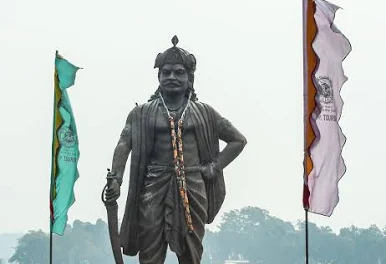
Raja Bhoja
Medieval India | c. 980 CE - c. 1055 CE
"Raja Bhoja was one of the most celebrated rulers of medieval India and the greatest king of the Paramara Dynasty. Renowned as a warrior, scholar, architect, and patron of arts, he transformed Malwa into a center of learning and culture. His achievements in literature, science, architecture, and governance earned him a legendary status in Indian history."
Born
c. 980 CEBirthplace
Malwa Kingdom, Paramara Dynasty (Present-day Madhya Pradesh, India)Died
c. 1055 CEPlace of Death
Dhar, Malwa Kingdom (Present-day Madhya Pradesh, India)Nationality
IndiaGender
MaleRaja Bhoja Biography
Raja Bhoja was one of the most distinguished rulers of medieval India and the most famous king of the Paramara Dynasty. He ruled the Malwa region during the eleventh century and gained immense fame as a warrior, scholar, administrator, architect, and patron of learning. His reign is often remembered as a golden age of culture, literature, science, and education.
Early Life
Raja Bhoja was born around 980 CE into the Paramara royal family. He was the son of Sindhuraja and the nephew of the famous Paramara ruler Munja.
From an early age, Bhoja displayed remarkable intelligence and an eagerness to learn. He received education in subjects such as literature, philosophy, astronomy, medicine, military science, and administration.
Accession to the Throne
After the death of his father, Raja Bhoja ascended the throne of the Paramara Kingdom. His capital was located at Dhar, which later became one of the most important centers of learning in India.
Upon becoming king, he worked to strengthen his kingdom and expand its influence across central India.
Military Achievements
Raja Bhoja was not only a scholar but also a capable military leader. Throughout his reign, he fought several campaigns against neighboring kingdoms and defended his territories from rival rulers.
His military skill enabled the Paramara Kingdom to maintain its position as a major power in central India.
Although he faced numerous conflicts, his kingdom remained prosperous and culturally vibrant.
Administration and Governance
Bhoja was known for his efficient administration and commitment to justice. He focused on improving agriculture, trade, public welfare, and infrastructure.
His governance emphasized fairness, economic growth, and the welfare of his subjects. Historical traditions remember him as an ideal ruler who placed great importance on knowledge and good governance.
Patron of Education and Learning
Raja Bhoja is especially celebrated for his support of education and scholarship. He invited scholars, poets, philosophers, and scientists to his court and encouraged intellectual discussions.
Dhar became an important center of knowledge under his patronage. Scholars from various regions visited his kingdom to participate in academic and cultural activities.
Because of his devotion to learning, Raja Bhoja is often regarded as one of India's greatest scholar-kings.
Contributions to Literature
Raja Bhoja himself was a prolific author and is credited with writing or sponsoring numerous scholarly works.
Some famous works associated with him include:
- Samarangana Sutradhara - A treatise on architecture, engineering, and town planning.
- Shringara Prakasha - A work on literary criticism and aesthetics.
- Rajamartanda - A commentary on Patanjali's Yoga Sutras.
- Tattva Prakasha - A philosophical work.
These texts demonstrate his wide-ranging interests in science, literature, philosophy, architecture, and governance.
Architectural Achievements
Raja Bhoja made significant contributions to architecture and construction. He commissioned temples, educational institutions, reservoirs, and public works throughout his kingdom.
One of his most famous architectural projects is the Bhojeshwar Temple in Bhojpur, Madhya Pradesh. Dedicated to Lord Shiva, the temple is renowned for its massive Shiva Lingam and grand design.
His architectural achievements continue to attract historians, architects, and visitors.
Bhojpur and Water Management
Raja Bhoja paid considerable attention to water conservation and irrigation projects. He is credited with constructing large lakes and reservoirs to support agriculture and provide water resources for the population.
Many of these projects demonstrated advanced engineering knowledge for their time.
Religious Views
Raja Bhoja was a devoted Hindu and a follower of Shaivism. However, like many great rulers of ancient and medieval India, he respected scholars and traditions from different philosophical backgrounds.
His kingdom became a center for spiritual, cultural, and intellectual development.
Legacy in Folklore
Over the centuries, Raja Bhoja became a legendary figure in Indian folklore. Numerous stories celebrate his wisdom, generosity, bravery, and commitment to justice.
His name is frequently associated with ideal kingship and enlightened governance in Indian traditions.
Death
Raja Bhoja passed away around 1055 CE. His death marked the end of one of the most celebrated reigns in medieval Indian history.
Although the Paramara Kingdom later declined, Bhoja's cultural and intellectual contributions continued to influence future generations.
Legacy
Raja Bhoja remains one of the most respected rulers in Indian history. He is remembered not only for military achievements but also for his extraordinary contributions to education, literature, architecture, science, and public administration.
His reign is often regarded as a golden age of knowledge and cultural development in central India.
Historical Significance
Historians regard Raja Bhoja as one of the greatest scholar-kings in world history. His contributions extended far beyond politics and warfare, influencing literature, philosophy, engineering, architecture, and education.
His achievements demonstrate the importance of combining intellectual excellence with effective governance.
Honours and Recognition
- Greatest ruler of the Paramara Dynasty.
- Founder of several educational and cultural institutions.
- Builder of the famous Bhojeshwar Temple.
- Renowned scholar, author, and patron of learning.
- Remembered as one of the greatest kings of Medieval India.
Conclusion
Raja Bhoja was a remarkable ruler whose achievements extended into nearly every field of human knowledge. Through his patronage of education, contributions to literature, advancement of architecture, and commitment to good governance, he left an enduring legacy that continues to inspire generations. His name remains synonymous with wisdom, culture, and enlightened leadership in Indian history.
Comments & Tribute (0)