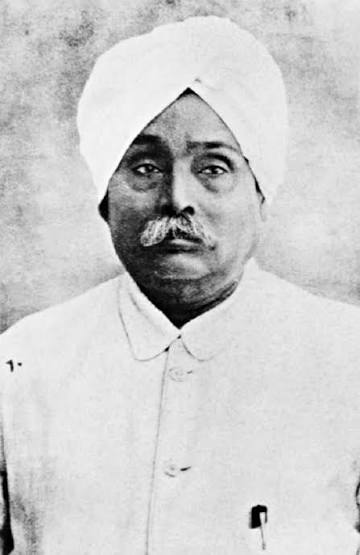
Lala Lajpat Rai
Freedom Fighters | 28 January 1865 - 17 November 1928
"Lala Lajpat Rai was one of India's greatest freedom fighters and nationalist leaders. Popularly known as the "Punjab Kesari" (Lion of Punjab), he played a significant role in India's struggle for independence and inspired generations through his leadership, writings, and commitment to national service."
Born
28 January 1865Birthplace
Dhudike Village, Ludhiana District, Punjab, British India (Present-day Moga District, Punjab, India)Died
17 November 1928Place of Death
Lahore, Punjab, British India (Present-day Lahore, Pakistan)Nationality
IndianGender
MaleLala Lajpat Rai Biography
Lala Lajpat Rai was one of the most prominent leaders of India's freedom struggle and a powerful voice against British colonial rule. Popularly known as the "Punjab Kesari" (Lion of Punjab), he dedicated his life to the cause of national freedom, social reform, and education. His patriotism, leadership, and sacrifice made him one of the most respected figures in Indian history.
Early Life and Family
Lala Lajpat Rai was born on 28 January 1865 in Dhudike village in Punjab. His father, Munshi Radha Krishan Azad, was a teacher and scholar, while his mother, Gulab Devi, was known for her religious values and strong character.
From a young age, Rai displayed exceptional intelligence and a deep interest in learning. His upbringing instilled in him values of discipline, service, and dedication to society.
Education
Lajpat Rai received his early education in Punjab and later studied law at Government College, Lahore. After completing his studies, he began practicing as a lawyer.
While pursuing his legal career, he also became interested in social reform and political activities, which gradually led him toward the national freedom movement.
Influence of Arya Samaj
Lala Lajpat Rai was greatly influenced by the teachings of Swami Dayanand Saraswati and the Arya Samaj movement. He actively supported educational and social reform initiatives aimed at uplifting Indian society.
He worked to promote education, eradicate social inequalities, and encourage self-reliance among Indians.
Entry into the Freedom Movement
As British rule tightened its control over India, Lajpat Rai became increasingly involved in nationalist politics. He joined the Indian National Congress and emerged as one of the strongest advocates of self-rule.
His speeches and writings inspired people across India to participate in the struggle for independence and demand greater political rights.
The Lal-Bal-Pal Trio
Lala Lajpat Rai became famous as a member of the legendary nationalist trio known as Lal-Bal-Pal:
- Lala Lajpat Rai
- Bal Gangadhar Tilak
- Bipin Chandra Pal
Together, these leaders promoted a more assertive and nationalist approach to securing India's freedom from British rule.
Champion of Nationalism
Lajpat Rai strongly believed that Indians should govern themselves and preserve their national identity. Through public meetings, political campaigns, and publications, he encouraged Indians to unite against colonial oppression.
His fearless criticism of British policies earned him immense popularity among the people and concern from colonial authorities.
Contributions to Education and Society
Besides political activism, Lajpat Rai made significant contributions to education and social welfare. He supported the establishment of schools, colleges, and institutions that promoted modern education while preserving Indian values.
He was associated with several educational initiatives and worked tirelessly for the upliftment of society.
International Advocacy
During his travels to the United States and other countries, Lajpat Rai highlighted India's demand for freedom on international platforms. He wrote extensively about British rule and sought global support for India's independence movement.
His writings helped increase awareness of India's political situation among people worldwide.
Protest Against the Simon Commission
One of the most significant events in Lala Lajpat Rai's life occurred in 1928 when the British government appointed the Simon Commission without including any Indian members.
To oppose the commission, widespread protests were organized across India. On 30 October 1928, Lajpat Rai led a peaceful demonstration in Lahore against the commission.
During the protest, police carried out a brutal lathi charge under the orders of British authorities. Lajpat Rai suffered severe injuries while leading the procession.
Despite his injuries, he courageously declared:
"Every blow on my body will prove a nail in the coffin of British imperialism."
Death and Martyrdom
The injuries sustained during the lathi charge seriously affected his health. After weeks of suffering, Lala Lajpat Rai passed away on 17 November 1928.
His death shocked the nation and intensified the freedom movement. Revolutionaries such as Bhagat Singh, Rajguru, and Sukhdev were deeply influenced by the incident and sought to avenge his death.
Books and Writings
Lala Lajpat Rai was also a respected author and thinker. Some of his notable works include:
- Young India
- England's Debt to India
- The Arya Samaj
- Unhappy India
Through his writings, he promoted nationalism, social reform, and political awareness.
Legacy
Lala Lajpat Rai remains one of the most respected leaders of India's independence movement. His courage, patriotism, and dedication to public service inspired countless Indians to join the struggle for freedom.
He is remembered not only as a political leader but also as an educator, reformer, and champion of national unity.
Honours and Recognition
- Popularly known as the "Punjab Kesari" (Lion of Punjab).
- Remembered as one of the leading figures of the Lal-Bal-Pal trio.
- Numerous educational institutions, roads, and public places are named in his honor.
- Recognized as a major inspiration for revolutionary freedom fighters.
- Celebrated as one of the pioneers of India's nationalist movement.
Conclusion
Lala Lajpat Rai dedicated his life to the service of India and its people. Through his leadership, activism, and sacrifice, he strengthened the foundation of India's freedom struggle. His legacy continues to inspire generations with the values of courage, patriotism, and unwavering commitment to justice and national progress.
Comments & Tribute (1)