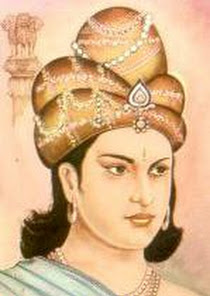
Bindusara
Ancient India | c. 320 BCE - c. 273 BCE
"Bindusara was the second emperor of the Maurya Empire and the son of Chandragupta Maurya. He successfully preserved and expanded the vast empire established by his father, extending Mauryan authority across much of the Indian subcontinent and paving the way for the glorious reign of his son, Emperor Ashoka."
Born
c. 320 BCEBirthplace
Pataliputra, Maurya Empire (Present-day Patna, Bihar, India)Died
c. 273 BCEPlace of Death
Pataliputra, Maurya Empire (Present-day Patna, Bihar, India)Nationality
Mauryan (Ancient Indian)Gender
MaleBindusara Biography
Bindusara was the second emperor of the Maurya Empire and one of the most significant rulers of ancient India. He succeeded his father, Chandragupta Maurya, and continued the work of strengthening and expanding the empire. Although he is often overshadowed by the achievements of his father and his famous son Ashoka, Bindusara played a crucial role in maintaining the stability and growth of one of the largest empires in Indian history.
Early Life
Bindusara was born around 320 BCE into the Mauryan royal family. He was the son of Chandragupta Maurya, the founder of the Maurya Empire, and was raised in the royal capital of Pataliputra.
From an early age, he received training in administration, military strategy, diplomacy, and governance. His education prepared him for the responsibilities of ruling a vast empire.
Accession to the Throne
After Chandragupta Maurya abdicated the throne and adopted a religious life, Bindusara became emperor around 297 BCE.
He inherited a powerful and well-organized empire that stretched across much of northern India. His primary challenge was to maintain political stability while expanding imperial authority into new territories.
Expansion of the Maurya Empire
Bindusara continued the expansion policies initiated by his father. Historical sources suggest that he extended Mauryan control deeper into the Deccan region of southern India.
Many ancient accounts describe him as a successful conqueror who brought large parts of the Indian subcontinent under Mauryan influence. By the end of his reign, most of India except some southern kingdoms was under Mauryan authority.
Administration and Governance
Bindusara maintained the efficient administrative system established by Chandragupta Maurya and Chanakya.
His government included provincial governors, tax officials, military commanders, and advisors who managed the extensive empire. This centralized administration allowed the Mauryan state to function effectively across a vast territory.
His reign is generally regarded as a period of political stability and administrative continuity.
Relationship with Chanakya
According to traditional accounts, Chanakya, the famous strategist and author of the Arthashastra, continued to serve as an advisor during the early part of Bindusara's reign.
Chanakya's experience and administrative expertise helped ensure a smooth transition of power and contributed to the stability of the empire.
Foreign Relations
Bindusara maintained diplomatic relations with several Hellenistic kingdoms that emerged after the death of Alexander the Great.
Historical records indicate that he exchanged ambassadors and communications with rulers of the Seleucid Empire and other Greek kingdoms.
These diplomatic links promoted trade, cultural interaction, and peaceful relations between India and the Mediterranean world.
Greek Accounts
Ancient Greek writers referred to Bindusara as "Amitrochates," believed to be derived from the Sanskrit title Amitraghata, meaning "Slayer of Enemies."
Greek sources mention contacts between Bindusara and foreign rulers, highlighting the international prestige of the Maurya Empire during his reign.
Family and Children
Bindusara had several sons, among whom the most famous were:
- Ashoka - Future Emperor and one of the greatest rulers in world history.
- Susima - Considered one of the leading contenders for succession.
- Vitashoka - Mentioned in Buddhist traditions.
The question of succession became an important issue toward the end of Bindusara's reign.
Religious Views
Unlike his son Ashoka, Bindusara is not closely associated with a particular religion. Historical evidence suggests that he was tolerant of different religious traditions and allowed various philosophical schools to flourish within the empire.
This atmosphere of religious freedom contributed to intellectual and cultural development.
Economic Prosperity
Under Bindusara's rule, the Maurya Empire continued to prosper economically. Agriculture, trade, mining, crafts, and commerce flourished throughout the empire.
The extensive road network and strong administrative system helped support economic growth and improve communication between different regions.
Death
Bindusara died around 273 BCE after ruling the Maurya Empire for approximately twenty-five years.
Following his death, a succession struggle took place among his sons, eventually leading to the rise of Ashoka as the next Mauryan emperor.
Legacy
Bindusara played a vital role in preserving and strengthening the empire founded by Chandragupta Maurya. His successful administration and territorial expansion ensured that the Mauryan Empire remained stable and powerful.
His achievements provided the foundation upon which Ashoka would later build one of the greatest imperial reigns in Indian history.
Historical Significance
Although less celebrated than Chandragupta Maurya and Ashoka, Bindusara was essential to the continuity of the Mauryan dynasty. He successfully managed one of the largest empires of the ancient world and maintained its strength during a critical transitional period.
His reign helped establish the Mauryan Empire as a dominant political force across the Indian subcontinent.
Honours and Recognition
- Second Emperor of the Maurya Empire.
- Son of Chandragupta Maurya.
- Father of Emperor Ashoka.
- Expanded Mauryan influence into southern India.
- Remembered as a capable administrator and ruler of Ancient India.
Conclusion
Bindusara was a powerful and effective ruler who safeguarded and expanded the Maurya Empire during a crucial phase of its history. His leadership ensured political stability, economic prosperity, and territorial growth, creating the conditions that allowed the Mauryan Empire to reach its greatest heights under Emperor Ashoka. His contributions remain an important chapter in the story of Ancient India.
Comments & Tribute (0)